
Cannabis concentrate descriptions often combine technical terminology with promotional language, making it difficult to distinguish measurable facts from marketing claims. Terms such as THCa, live rosin, and solventless extraction describe different aspects of a product, but they do not automatically establish its purity, potency, or safety. Understanding what these terms mean helps adults evaluate product information more carefully. By reviewing ingredient labels, laboratory reports, and manufacturer documentation, consumers can make better-informed comparisons without relying on product names or advertising language alone.
What THCa Rosin Actually Means
THCa, short for tetrahydrocannabinolic acid, is a cannabinoid naturally present in cannabis. It is chemically distinct from delta-9 THC, the compound primarily associated with cannabis intoxication. When exposed to sufficient heat, THCa can undergo decarboxylation, converting into THC.
Live rosin generally refers to a cannabis concentrate produced using mechanical separation methods rather than chemical solvents during extraction, often from material preserved to retain its original characteristics.
The term fvkd thca rosin combines a cannabinoid reference with a concentrate category. However, the name alone cannot confirm the exact formulation, cannabinoid concentration, extraction process, or quality of a specific product.
Why Terminology Needs Context
Product descriptions may use technical terms to communicate a concentrate’s identity, but consumers should verify important claims through product-specific documentation.
For example, the term solventless describes an extraction approach; it does not automatically mean a finished product is free of every possible contaminant. Likewise, a THCa label does not establish a particular potency without supporting measurements.
Understanding these distinctions helps consumers avoid treating technical-sounding terminology as proof of quality.
How Marketing Language Differs From Verifiable Facts
Words such as premium, pure, and high quality can communicate a brand’s intended positioning. However, these expressions do not have one universal meaning that independently establishes a product’s composition or safety.
Measurable details offer a stronger basis for comparison. These may include the stated cannabinoid concentration, ingredient list, net quantity, batch identification, and relevant laboratory results.
Claims Worth Checking
When evaluating a concentrate, consider whether its product description provides evidence for its most important claims.
- Cannabinoid content: Are THCa, delta-9 THC, and other measured cannabinoids clearly reported?
- Extraction information: Is the claimed production method explained?
- Ingredient transparency: Does the label identify the stated formulation?
- Batch traceability: Can the product be connected to relevant documentation?
- Laboratory testing: Are the laboratory and testing scope identifiable?
If important information is missing, contacting the manufacturer or seller is more reliable than assuming a promotional claim is accurate.
Understanding Laboratory Testing
A certificate of analysis, commonly called a COA, is a laboratory report documenting the results of specified tests on a sample. Depending on the product and testing program, it may include cannabinoid measurements and screening for selected contaminants.
A useful report should identify the sample and provide enough information to connect the results to the product or batch being considered.
Consumers should review:
| Report detail | Why it matters |
| Sample identification | Helps connect the report to a specific product |
| Cannabinoid measurements | Shows the quantities of cannabinoids tested |
| Contaminant screening | Identifies which additional substances were assessed |
| Laboratory identity | Helps establish who conducted the testing |
| Report date | Provides context for the document’s relevance |
Testing has limitations. A report may not cover every potential hazard, and a favorable result does not establish that a concentrate is harmless. It also cannot guarantee that every unit in a product category has an identical composition.
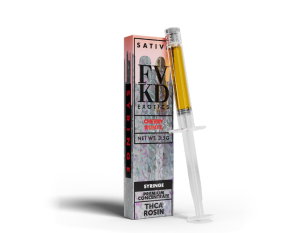
What a THCa Live Rosin Syringe Label Can Reveal
A syringe is a dispensing format, not a guarantee of a particular formulation or intended use. Concentrates packaged in syringes can vary in consistency, composition, and application.
The name FVKD THCa Live Rosin Syringe combines a cannabinoid reference, a concentrate category, and a container format. Each element communicates something different, but none should replace the full product label or manufacturer instructions.
Why Intended Use Matters
Consumers should confirm the product’s intended application before handling or using a concentrate. A dispensing syringe should never be assumed to contain a substance suitable for injection or to be compatible with every vaping device.
Check the stated ingredients, cannabinoid measurements, storage instructions, and any compatibility requirements. If the intended use is unclear, seek clarification from the manufacturer rather than guessing.
The label should also be reviewed for relevant warnings and handling precautions. Packaging alone cannot establish whether a product is suitable for a particular individual or application.
Comparing Product Claims With Actual Specifications
A careful product comparison begins with the specific item rather than the general reputation of a category. Two concentrates marketed with similar terminology may differ in formulation, cannabinoid content, processing, and testing results.
For consumers evaluating FVKD Exotics products, useful questions include whether the stated ingredients are available, whether laboratory documentation can be matched to the product, and whether the manufacturer provides clear handling instructions.
A distinctive name or premium presentation can help identify a product, but neither proves that it meets a particular quality standard. Reliable documentation provides a stronger basis for evaluating measurable claims.
Responsible Handling and Safety Considerations
Cannabis concentrates may contain substantial amounts of cannabinoids, and their effects can vary according to composition, exposure, and individual sensitivity. THCa may convert to intoxicating THC when heated, so it should not be assumed to be non-intoxicating in every context.
Keep concentrates securely away from children and pets, follow the manufacturer’s storage instructions, and comply with applicable laws. Do not drive or operate machinery while impaired.
People who are pregnant or breastfeeding, have relevant medical conditions, or take medications that may interact with cannabinoids should consult a qualified healthcare professional before considering cannabis-derived products.
Conclusion
Marketing terminology can help identify a concentrate, but it cannot independently verify composition, extraction methods, potency, or safety. FVKD Exotics products should be assessed through accurate labeling, relevant laboratory reports, and clear manufacturer instructions. Understanding THCa terminology and syringe formats helps adults ask better questions and distinguish measurable facts from promotional claims. Responsible evaluation also involves recognizing testing limitations, considering health risks, and checking applicable laws before making decisions about cannabis-derived products.
Disclaimer: For adults 21+ only, where legally permitted. Cannabis concentrates may carry health risks. This article is informational only and is not medical or legal advice.